
Quick Contact
- Attapur, Tolichouki, Manikonda, Sun City, Hyderabad
- 9505030603
- 9441695593
- swamysakes17@gmail.com
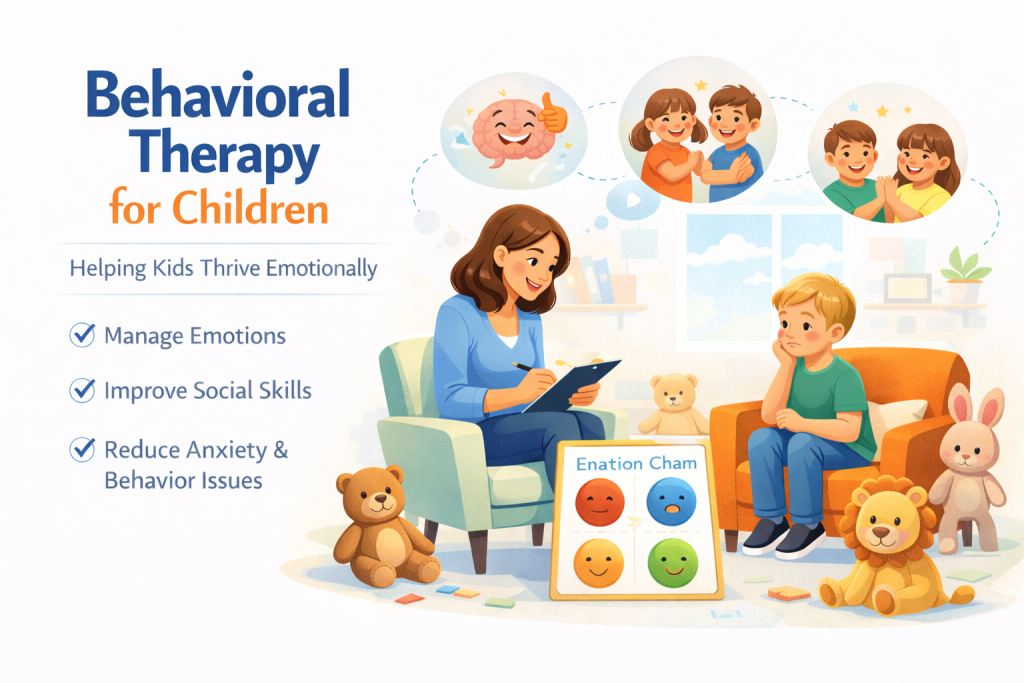
Behavioral Therapy is a type of psychotherapy that focuses on changing harmful or maladaptive behaviors by reinforcing positive behaviors and reducing or eliminating negative ones. It is based on the principle that behavior is learned and can therefore be changed through various techniques and interventions.
Key Aspects of Behavioral Therapy:
1.
Focus on Behavior:
Unlike other forms of therapy that might explore the underlying causes of behavior (such as thoughts or emotions), behavioral therapy directly addresses the problematic behavior itself.
2.Techniques:
Positive Reinforcement: Encouraging desired behaviors by rewarding them. For example, giving a child praise or a small reward when they complete their homework.
Negative Reinforcement: Removing an unpleasant stimulus when the desired behavior occurs. For example, reducing the time a child has to spend on chores if they behave well.
Punishment: Introducing an unpleasant consequence to decrease the likelihood of an unwanted behavior. For example, a time-out for misbehavior.
Modeling: Demonstrating desired behaviors for the individual to imitate.
Systematic Desensitization: Gradually exposing an individual to a feared object or situation while teaching them relaxation techniques to reduce anxiety.
Exposure Therapy: Repeated exposure to a feared situation or object until the fear diminishes.
3. Applications:
Children and Adolescents: Behavioral therapy is often used to treat ADHD, conduct disorders, and other behavioral issues.
Adults: It can help with anxiety disorders, depression, phobias, OCD, and more.
Developmental Disorders: It is also commonly used for individuals with autism spectrum disorder (ASD) and intellectual disabilities to teach social, communication, and life skills.
4. Goal-Oriented:
Behavioral therapy is typically structured and goal-oriented, with clear objectives established at the beginning of treatment.
5. Evidence-Based: This approach is backed by a substantial body of research demonstrating its effectiveness in treating various mental health and behavioral issues.
Key Aspects of Behavioral Therapy:
1. Focus on Behavior: Unlike other forms of therapy that might explore the underlying causes of behavior (such as thoughts or emotions), behavioral therapy directly addresses the problematic behavior itself.
2. Techniques:
o Positive Reinforcement: Encouraging desired behaviors by rewarding them. For example, giving a child praise or a small reward when they complete their homework.
Negative Reinforcement:
Removing an unpleasant stimulus when the desired behavior occurs. For example, reducing the time a child has to spend on chores if they behave well.
Punishment: Introducing an unpleasano t consequence to decrease the likelihood of an unwanted behavior. For example, a time-out for misbehavior.
Modeling: Demonstrating desired behaviors for the individual to imitate.
Systematic Desensitization: Gradually exposing an individual to a feared object or situation while teaching them relaxation techniques to reduce anxiety.
Exposure Therapy: Repeated exposure to a feared situation or object until the fear diminishes.
3. Applications:
o Children and Adolescents: Behavioral therapy is often used to treat ADHD, conduct disorders, and other behavioral issues.
Adults: It can help with anxiety disorders, depression, phobias, OCD, and more.
Developmental Disorders: It is also commonly used for individuals with autism spectrum disorder (ASD) and intellectual disabilities to teach social, communication, and life skills.
4. Goal-Oriented: Behavioral therapy is typically structured and goal-oriented, with clear objectives established at the beginning of treatment.
5. Evidence-Based: This approach is backed by a substantial body of research demonstrating its effectiveness in treating various mental health and behavioral issues.
Overall:
Behavioral therapy is a practical and results-oriented approach to mental health treatment, focusing on modifying problematic behaviors and reinforcing positive ones. It is widely used across different age groups and mental health conditions.
9505030603
swamysakes17@gmail.com
Attapur, ToloChouki, Manikonda,
Sun City, Hyderabad
© 2026. All rights reserved.