
Quick Contact
- Attapur, Tolichouki, Manikonda, Sun City, Hyderabad
- 9505030603
- 9441695593
- swamysakes17@gmail.com
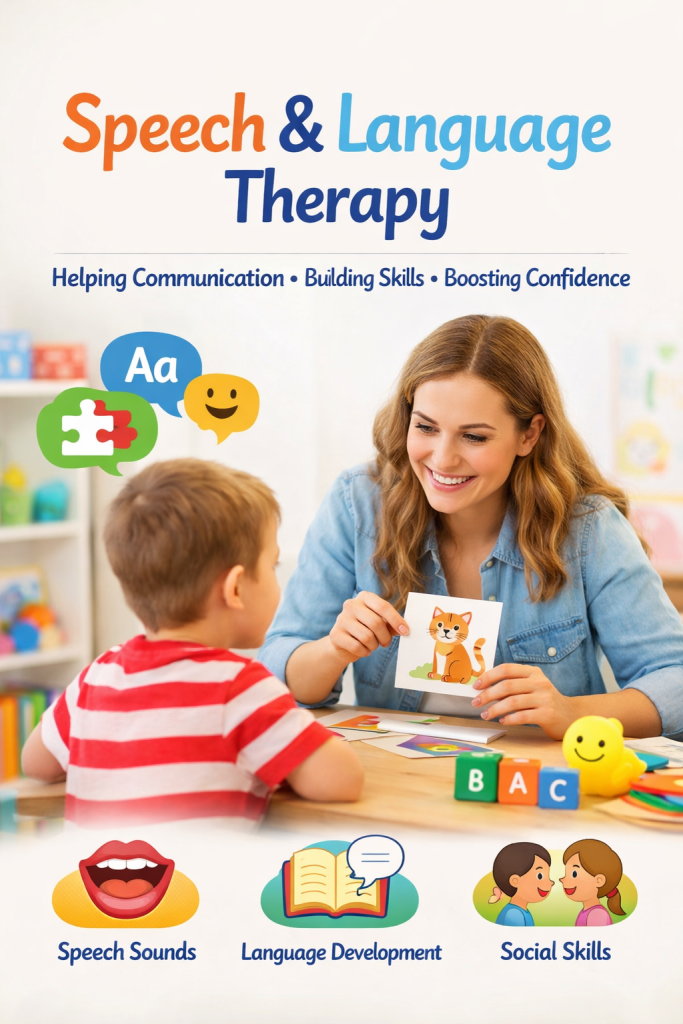
Speech and Language Therapy is a specialized form of therapy focused on helping individuals with communication difficulties, including speech, language, voice, fluency, and swallowing disorders. Speech-Language Pathologists (SLPs), also known as speech therapists, are the professionals who provide this therapy.
Key Aspects of Speech and Language Therapy:
1. Speech Disorders:
o Articulation Disorders: Difficulty in pronouncing sounds correctly.
Fluency Disorders: Issues such as stuttering, where the flow of speech is interrupted.Voice Disorders: Problems with the pitch, volume, or quality of the voice that distracts listeners from what is being said.
2.
Language Disorders:
Receptive Language Disorders: Difficulty in understanding or processing language.
o Expressive Language Disorders: Difficulty in putting words together, limited vocabulary, or inability to use language in a socially appropriate way.
3. Social Communication Disorders:
o Difficulty in using verbal and nonverbal communication in social settings, such as understanding gestures, following conversational rules, or making eye contact.
4. Cognitive-Communication Disorders:Issues with communication that are related to memory, attention, perception, or problem-solving often resulting from a brain injury, stroke, or degenerative diseases like dementia.
5.
Swallowing Disorders (Dysphagia):
Difficulty in swallowing that may occur due to a range of causes, including neurological conditions or after surgery.
Techniques and Approaches:
•
Articulation Therapy: Helps individuals learn how to produce specific sounds and syllables correctly.
• Language Intervention Activities: Involves exercises and activities to improve language skills, such as following directions, storytelling, and expanding vocabulary.
• Oral-Motor/Feeding Therapy: Exercises that involve the lips, tongue, and jaw to improve control and strength, which can help with speech production and swallowing.
• Augmentative and Alternative Communication (AAC): Includes the use of communication boards, electronic devices, or sign language for those who cannot use verbal speech effectively.
• Fluency Shaping: Techniques to manage stuttering, such as slow speech, gentle onset of words, and controlled breathing.
Who Can Benefit:
• Children:
With developmental delays, autism spectrum disorder (ASD), hearing loss, or speech and language delays.
• Adults: Recovering from strokes, brain injuries, or suffering from degenerative diseases like Parkinson’s or dementia that affect communication.
• Individuals with Hearing Impairments: Who may need assistance in developing effective communication skills.
Overall:
Speech and language therapy is essential for individuals who face challenges in communicating effectively. Through targeted interventions, speech therapists work to improve speech, language, cognitive-communication, and swallowing abilities, thereby enhancing the individual's quality of life.
9505030603
swamysakes17@gmail.com
Attapur, ToloChouki, Manikonda,
Sun City, Hyderabad
© 2026. All rights reserved.